
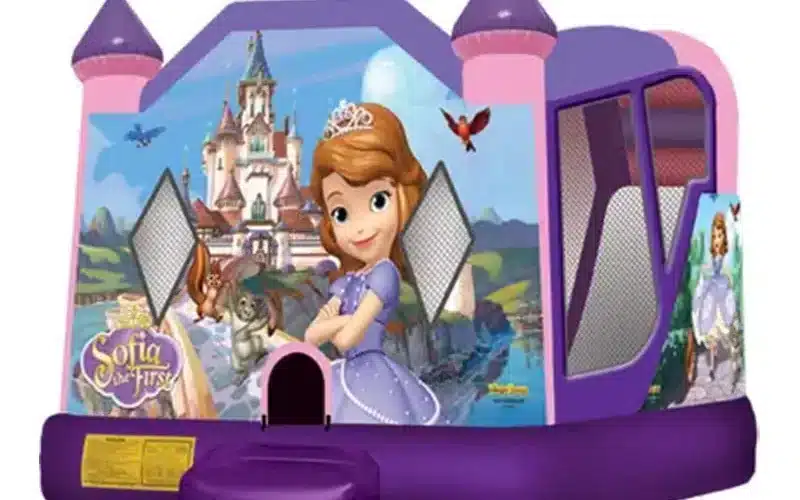
For jumping castle hire operators in Australia, electricity consumption is more than just a line item on an invoice; it is a critical factor in business profitability and site safety. When setting up at a backyard party in Sydney or a large community event in Melbourne, you may notice that some blowers seem to draw significantly more power than others, even if they look similar in size.
Understanding why these power discrepancies exist can help you manage your overhead costs, avoid tripped breakers, and extend the lifespan of your commercial inflatables.
1. Efficiency vs. Raw Power: The Motor Design
Not all 1.5HP or 2.0HP blowers are created equal. The most common reason for high electricity usage is the efficiency of the internal motor.
- Premium High-Efficiency Motors: Quality blowers are engineered with copper windings and precision-balanced impellers. These designs move a higher volume of air per watt of electricity consumed.
- Budget/Generic Motors: Cheaper blowers often use aluminium windings or less efficient motor designs that generate excessive heat. This wasted energy doesn’t help inflate the castle; it simply increases your power bill and shortens the motor’s life.
2. The Relationship Between Backpressure and Current
A jumping castle blower works harder depending on the “backpressure” it encounters. This is the resistance the air faces inside the inflatable.
- Newer, Tightly-Stitched Castles: If a castle is made from premium 0.55mm PVC with reinforced, tight seams, the blower reaches its optimal operating pressure quickly and maintains a steady, lower draw of current.
- Older or Low-Quality Castles: As a unit ages and becomes more “porous,” air escapes through the seams and fabric grain. This forces the blower to run at maximum capacity constantly to keep the unit firm. You might find a blower drawing twice the Amps on an old, leaky castle compared to a brand-new, airtight unit.
3. Starting Current vs. Running Current
In Australia, where we operate on a 230V/240V system, the “Inrush Current” (the power needed to start the motor) can be up to three times higher than the running current. Low-quality blowers often lack high-performance capacitors, meaning they draw a massive amount of electricity every time they start up. If you are running multiple units on a single 10A circuit, these inefficient blowers are far more likely to trip the circuit breaker during the initial inflation phase.
4. Blower Housing and Impeller Aerodynamics
The design of the plastic or metal housing plays a massive role in electricity usage.
- Aerodynamic Design: Advanced blowers have smooth internal air-paths and precisely angled impellers that “slice” through the air with minimal resistance.
- Poor Design: If the housing is poorly shaped, it creates air turbulence inside the blower. The motor has to fight against this turbulence to push air forward, consuming significantly more electricity to achieve the same CFM (Cubic Feet per Minute) output.
5. Maintenance and Air Filter Clogging
In the dusty environments of many Australian parks, air filters can clog quickly. When a filter is dirty, the blower is “choked.” Most people assume a choked blower uses less power, but for many centrifugal fans used in the hire industry, the motor may actually work less efficiently or overheat, leading to erratic power draws and potential damage. Regular cleaning of the air intake ensures the motor operates at its designed electrical efficiency.
6. Calculating the Cost for Your Hire Business
With rising electricity prices across Australia, the difference in blower efficiency can impact your bottom line.
- A highly efficient 1.1kW blower running for 8 hours might cost significantly less to operate than a poorly designed “budget” blower that draws nearly 2kW to perform the same task.
- When running a fleet of 10 or 20 castles every weekend, these “hidden” costs can add up to hundreds of dollars in unnecessary expenses over a season.
Summary: Quality Equipment Pays for Itself
When purchasing equipment for your jumping castle hire business, the cheapest blower often becomes the most expensive over time. High electricity draw is usually a symptom of poor engineering, ageing PVC material, or lack of maintenance.
By investing in high-efficiency blowers and maintaining a fleet of high-quality 0.55mm PVC jumping castles, you not only save money on electricity but also ensure a more reliable and safer setup for your customers. Remember, a blower that uses twice as much power is often doing so because it is struggling—and a struggling motor is a failure waiting to happen.