
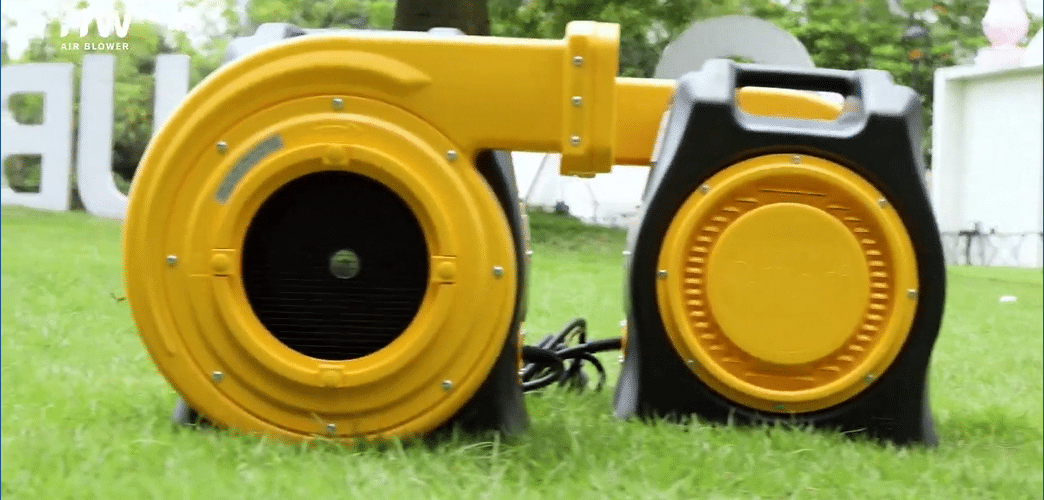
Operating a jumping castle hire business in Australia means your equipment often faces extreme environmental challenges. During a peak summer Saturday in Perth, Brisbane, or Western Sydney, your blowers are required to run for eight hours or more in ambient temperatures that can already exceed 35°C.
While a blower motor will naturally generate some heat during operation, a unit that is extremely hot to the touch is a major warning sign. Ignoring an overheating blower can lead to total motor failure, fire hazards, or sudden deflation while children are inside. Here are the top 6 reasons why your jumping castle blower is overheating and how to prevent it.
1. Restricted Air Intake (The “Choke” Factor)
The most common cause of overheating is a simple lack of airflow. A blower motor relies on the very air it is pumping to keep its internal components cool.
- The Problem: In many Australian backyards, dry grass, fallen leaves, or even loose plastic bags can get sucked against the air intake mesh.
- The Result: When the intake is partially blocked, the motor must work harder to pull air in, creating massive internal friction and heat with no fresh air to dissipate it. Always ensure a “clear zone” of at least one metre around the blower intake.
2. Excessive Backpressure from the Castle
A blower is designed to push air into a specific volume. If the air has nowhere to go, or if the resistance is too high, the motor will “labour” and overheat.
- Over-Inflation: If the jumping castle is too small for the blower (e.g., using a high-output 2.0HP blower on a small toddler castle), the air pressure builds up inside the housing, causing the motor to heat up rapidly.
- Kinked Inflation Tubes: Check the “tail” or inflation tube of your jumping castle. If it is twisted or bent at a sharp angle, the blower is fighting against a wall of air. This resistance causes the electrical current to spike, leading to rapid heat buildup.
3. Voltage Drop and Extension Lead Issues
In Australia, we operate on a 230V/240V system. However, the quality and length of your extension leads can significantly impact the voltage reaching the motor.
- Undersized Leads: Many hire operators make the mistake of using thin, domestic-grade extension leads. For a commercial 1.1kW or 1.5kW blower, you should always use a heavy-duty 15-amp rated lead with a minimum core thickness of 1.5mm².
- Long Runs: If your lead is longer than 25 metres, you will experience “voltage drop.” When the voltage drops, the motor draws more Amps to compensate, which generates intense heat within the motor windings.
4. Worn Bearings and Mechanical Friction
If your blower is older, the internal bearings may be reaching the end of their lifespan.
- The Signs: If the overheating is accompanied by a high-pitched squealing sound or a grinding noise, the bearings are likely worn.
- The Risk: Worn bearings create physical friction. This friction adds a mechanical load to the motor, causing the entire metal shaft and housing to become dangerously hot. If you notice the blower takes longer to reach full speed than it used to, it’s time for a mechanical service.
5. Ambient Temperature and Direct Sunlight
We cannot ignore the Australian sun. A black or dark-coloured blower housing sitting on hot asphalt in 40°C heat has a massive head start on overheating.
- Solar Gain: The plastic or metal casing absorbs UV radiation, raising the baseline temperature of the motor before it even starts.
- Management: Where possible, position blowers in the shade or use a dedicated blower cover (that allows for maximum airflow) to shield the unit from direct sunlight.
6. Internal Dust and Sand Accumulation
After dozens of hires at local parks or beaches, fine Australian sand and dust can bypass the intake mesh and settle inside the motor housing.
- Insulation Effect: This layer of dust acts as an insulator, trapping heat inside the copper windings.
- Maintenance: Periodically using compressed air to blow out the dust from the motor vents can significantly drop the operating temperature and extend the life of the unit.
Summary: Prevention is Better Than Replacement
⚠️ SAFETY CHECK: If a blower is so hot that you cannot keep your hand on the casing for more than three seconds, shut it down immediately.
An overheating blower is a cry for help from your equipment. In the jumping castle hire industry, your blowers are the heart of your operation. By ensuring you use the correct gauge extension leads, keeping intakes clear of debris, and matching the blower’s power to the size of the castle, you can avoid the majority of heat-related failures.
Protecting your blowers from heat is the best way to ensure your business stays inflated and profitable all summer long.