
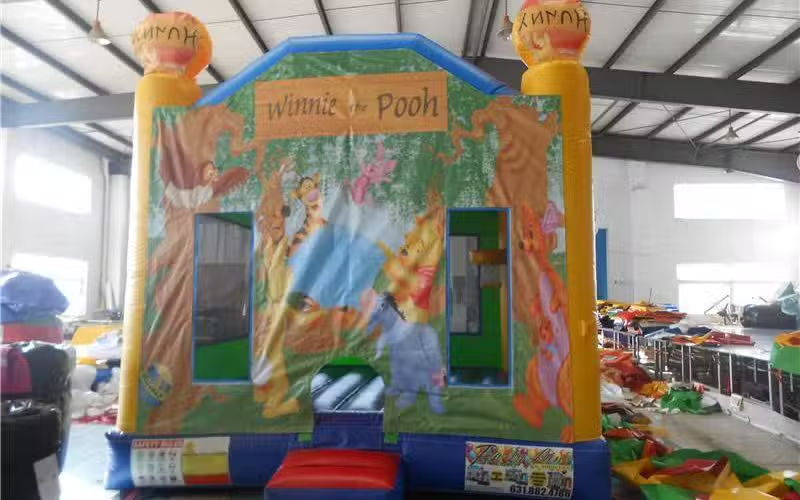
A jumping castle usually uses less electricity than many people expect. The exact amount depends on the power rating of the blower, the number of blowers required and how long the inflatable operates.
Most commercial jumping castles use a continuous-air system. This means the blower must remain switched on whenever the inflatable is in use. Even though it may run for several hours, the electricity cost for a typical party is usually only a small part of the overall hire expense.
How to Calculate the Electricity Use
Electricity consumption is measured in kilowatt-hours, usually written as kWh. You can estimate the amount used with a simple calculation:
Blower power in kilowatts × operating hours = electricity used in kWh
For example, a blower rated at 1.1 kW and operated for six hours would use approximately:
1.1 kW × 6 hours = 6.6 kWh
To estimate the cost, multiply the electricity used by your electricity rate:
6.6 kWh × electricity price per kWh = estimated running cost
If the electricity rate were AUD 0.30 per kWh, this example would cost approximately AUD 1.98 for six hours. This is only an illustration, as actual electricity prices vary between locations, providers and tariffs.
The blower’s power rating can usually be found on its identification label. Do not estimate its electricity use from the physical size of the blower.
What Affects Electricity Consumption?
A standard jumping castle may require one blower, while a large inflatable slide, obstacle course or combination unit may require two or more.
The total electricity consumption depends mainly on:
- The power rating of each blower
- The number of blowers operating
- The total running time
- The size and design of the inflatable
If two identical blowers operate for the same length of time, their combined electricity use will be approximately twice that of one blower.
Larger inflatables do not always use the same blower, so check the specifications for the individual model rather than relying on a general estimate.
Why Must the Blower Stay On?
Small amounts of air naturally escape through the seams of a continuous-air jumping castle. The blower replaces this air and maintains the inflatable’s correct shape and pressure.
The blower must remain running whenever anyone is using the jumping castle. Switching it off while children are inside may cause the structure to soften or collapse.
There is usually no need to turn the blower off between short play sessions. If the castle remains correctly anchored and supervised, it can stay inflated while children take a break.
Once the event has finished, remove all users and follow the correct shutdown and deflation procedure.
Can Multiple Blowers Use the Same Power Point?
Do not assume that several blowers can safely run from one power point, adaptor or power board.
Every blower has its own electrical rating. The combined demand from multiple blowers may exceed the capacity of the circuit or connected equipment. Blower motors may also draw additional power when starting.
Before the event, tell the hire company how many suitable power points are available and how far they are from the setup area. Larger inflatables or multiple units may require separate circuits.
Avoid connecting multiple adaptors or power boards together. If you are unsure whether the available power supply is suitable, ask a licensed electrician.
If a safety switch or circuit breaker repeatedly trips, do not continue resetting it. Disconnect the equipment safely and identify the cause before restoring power.
Using Extension Leads Safely
Jumping castles are often positioned some distance from the nearest power point, so an extension lead may be required.
Use a lead that is suitable for the blower, the location and the expected electrical load. Check the plug, socket and full length of the cable for visible damage before use.
Extension leads should be protected from:
- Water and wet ground
- Vehicle traffic
- Sharp edges
- Doorways
- Crushing or pinching
- Children and event visitors
- Excessive heat
Where a cable crosses a walking area, suitable cable protection may be needed to reduce the risk of damage and prevent people from tripping.
Do not use a damaged lead, loose plug or broken power point. RCD protection, commonly known as a safety switch, should be used where required. Electrical equipment used by businesses, schools or public events may also be subject to inspection and testing requirements.
What Happens If It Rains?
Rain can make the jumping surface slippery and create risks around the blower, plugs and electrical connections.
Do not place a towel, plastic sheet or enclosed box over an operating blower. An improvised cover may restrict ventilation, trap heat or fail to protect the electrical equipment properly.
If rain begins or a storm approaches, remove all users and follow the shutdown instructions supplied with the inflatable. Do not handle wet plugs, leads or electrical equipment unless it is safe to do so.
Wet, damaged or malfunctioning electrical equipment should be removed from use and checked by an appropriately qualified person.
Can You Use a Generator?
A generator may be suitable for a park, rural property or event site without access to mains electricity. However, it must be correctly selected for the blower and total equipment load.
The generator needs enough capacity for both normal operation and motor start-up. An undersized generator may struggle to start the blower, provide unstable power or shut down during the event.
Before using a generator, confirm:
- The power requirements of every blower
- The total number of blowers
- The generator’s running and starting capacity
- The required protective equipment
- The fuel needed for the full event
- A safe position away from users
Fuel-powered generators must operate outdoors in an appropriate location, away from enclosed or poorly ventilated spaces. Exhaust, heat, fuel and cables must not create additional hazards.
Ask the generator supplier, hire company or a licensed electrician to confirm compatibility if you are uncertain.
Is Electricity Included in the Hire Price?
The customer or venue normally supplies the electricity used during the event, although hire arrangements can vary.
For a typical party, the direct electricity cost is often relatively small. Delivery, setup, collection, cleaning, insurance and staffing usually have a greater effect on the total hire price.
Before confirming a booking, ask:
- How many blowers are required?
- What is the power rating of each blower?
- How many power points are needed?
- Are separate circuits required?
- Are extension leads and safety equipment supplied?
- Can a generator be provided if mains power is unavailable?
A jumping castle does not usually consume a large amount of electricity during a standard event, but the power supply still needs to be planned correctly. Check the blower rating, calculate the estimated running time and confirm that the venue has suitable electrical capacity.
Never attempt to reduce electricity costs by using an undersized blower, overloaded adaptor or unsuitable extension lead. Safe and reliable operation is more important than saving a small amount on power.