
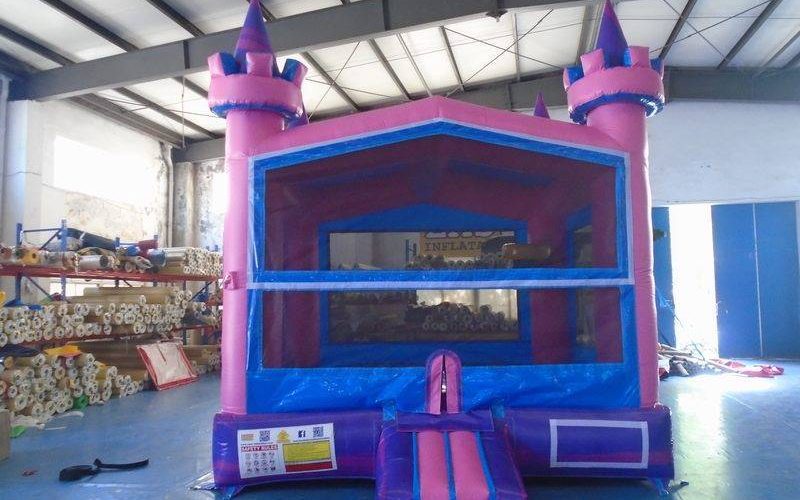
The best way to store a jumping castle is to clean and dry it completely, remove as much air as possible, fold it carefully and keep it in a secure, dry and well-ventilated indoor space.
Correct storage protects the vinyl, seams, netting and printed areas from moisture, pests, excessive heat and unnecessary pressure. It also makes the inflatable easier to inspect and prepare for its next use.
The following comparisons explain what to do—and what commonly causes damage.
Store It Clean, Not “Clean It Next Time”
Best practice: Inspect and clean the jumping castle before packing it away.
Remove grass, leaves, sand, food, tape, confetti and other debris while the inflatable is still open. Pay particular attention to entrance steps, internal corners, climbing areas and removable covers.
Cleaning before storage prevents dirt from being pressed into the material while the castle is rolled. It also gives you an opportunity to identify damage before the next booking.
Common mistake: Packing the inflatable immediately after an event and planning to clean it later.
Once the castle has been rolled, dirt and sticky residue can remain trapped for weeks or months. When the unit is needed again, cleaning may take longer and the operator may discover damage too late to arrange repairs.
Store It Dry, Not Slightly Damp
Best practice: Check the complete inflatable for moisture before folding.
The main surfaces may feel dry while water remains inside seams, corners, entrance steps, climbing sections or beneath removable covers. Use absorbent towels to remove standing water, then allow the unit to remain inflated in suitable conditions until it has dried completely.
Check the underside and groundsheet as well. Moisture transferred from wet grass or concrete can become trapped inside the roll.
Common mistake: Assuming a small amount of moisture will dry inside the storage bag.
A tightly rolled inflatable receives very little airflow. Trapped moisture may contribute to mould, staining and unpleasant odours. It can also make the unit difficult to prepare for its next event.
If the castle cannot be completely dried at the venue, transport it according to the appropriate procedure and reopen it for drying as soon as practical.
Remove Air Before Folding
Best practice: Allow enough time for the jumping castle to deflate fully.
After all users have left, switch off and disconnect the blower according to the operating instructions. Open the designated deflation outlets and allow air to escape.
The inflatable can then be carefully flattened to move remaining air towards the outlets. Larger units may require a specific deflation or rolling procedure.
Common mistake: Beginning to fold while large pockets of air remain inside.
Trapped air makes the roll bulky, uneven and difficult to control. Forcing an inflated section into a tight fold may also place unnecessary pressure on seams and internal components.
Do not jump, drive or place heavy equipment on the inflatable to force the air out.
Follow the Correct Folding Method
Best practice: Arrange the inflatable evenly and follow the recommended folding procedure.
Move walls, towers, steps and decorative elements towards the centre without pulling or twisting them. Keep blower tubes, anchor straps and loose attachments inside the final width of the fold so they do not drag on the ground.
Fold both sides towards the centre and create a compact shape suitable for rolling. The exact method will depend on the size and design of the inflatable.
Common mistake: Folding without considering the inflatable’s structure.
Sharp or poorly positioned folds can place unnecessary pressure on seams, printed areas and attached components. Follow the folding method recommended for the inflatable. Avoid creating sharp folds across blower tubes, anchor points, printed panels or raised decorative features.
Avoid dragging exposed vinyl across concrete or asphalt during folding.
Use the Correct Storage Bag
Best practice: Place the rolled inflatable in a strong storage bag or protective cover designed for its size and weight.
The bag should protect the unit from dust, dirt and damage during handling. It should also be clearly labelled so the correct inflatable can be identified without opening several packages.
A useful label may include:
- Product name
- Identification or serial number
- Packed weight
- Number of blowers
- Number of packages
- Required accessories
- Date of the last inspection
Store blowers, leads, mats and anchoring equipment in an organised way, but avoid placing sharp or heavy accessories inside the inflatable roll unless the packing instructions specifically permit it.
Common mistake: Using a thin plastic sheet as long-term packaging.
Lightweight plastic can tear during handling and may trap moisture. An unlabelled package can also lead to the wrong blower or accessories being sent to an event.
Keep It Off the Floor
Best practice: Store the packaged jumping castle on a suitable pallet, shelf or raised platform.
Keeping it off the floor reduces the risk of contact with water, dirt and cleaning chemicals. The supporting surface must be strong enough for the packed weight and large enough to prevent the roll from hanging over an edge.
The storage area should be dry, secure and reasonably ventilated. Check for roof leaks, condensation and signs of pest activity.
Common mistake: Leaving the roll directly on a concrete floor.
Concrete can become damp even when the surrounding warehouse appears dry. A leaking roof, blocked drain or minor flood may also reach equipment stored at floor level before anyone notices.
Avoid Heat, Sunlight and Heavy Loads
Best practice: Choose an indoor location protected from direct sunlight and extreme temperatures.
Do not position the inflatable beside heaters, hot machinery or other sources of heat. Keep it away from fuels, solvents and chemicals that could leak or produce damaging fumes.
Store the roll where it can be moved safely without climbing over other equipment.
Common mistake: Stacking heavy items on top of the jumping castle.
Long-term pressure may create deep creases, affect decorative features or damage items hidden inside the roll. High or unstable stacks can also make handling more dangerous.
If several inflatables are stored together, use suitable shelving or a planned storage system rather than creating an unsupported pile.
Protect It From Pests
Best practice: Keep the storage area clean and inspect it regularly for rodents and insects.
Avoid storing food, open rubbish or animal feed near inflatable equipment. Check bags for holes, droppings or nesting material during routine warehouse inspections.
Common mistake: Assuming the storage bag provides complete protection.
Rodents may damage bags, straps, netting and PVC. The problem may remain hidden until the inflatable is opened for the next hire.
Pest control should focus on the storage environment rather than placing unsuitable chemicals directly on the inflatable.
Inspect Before Returning It to Service
Long-term storage does not guarantee that a jumping castle will remain ready for immediate use.
Before the next event, remove the unit from storage and check the bag and inflatable for:
- Moisture or mould
- Unusual odours
- Pest damage
- Loose stitching
- Cuts or worn areas
- Damaged straps or anchor points
- Missing accessories
- Signs of previous repairs failing
Inflate the castle in a suitable area and complete the required inspection before sending it to a customer or opening it for use.
A good storage routine begins before the inflatable is rolled. Clean it, dry it completely, remove trapped air and fold it without forcing the material. Use suitable packaging, keep the unit raised off the floor and protect it from heat, sunlight, moisture, pests and heavy loads.
These steps take more time at the end of an event, but they can reduce cleaning, repairs and delays before the next one.