
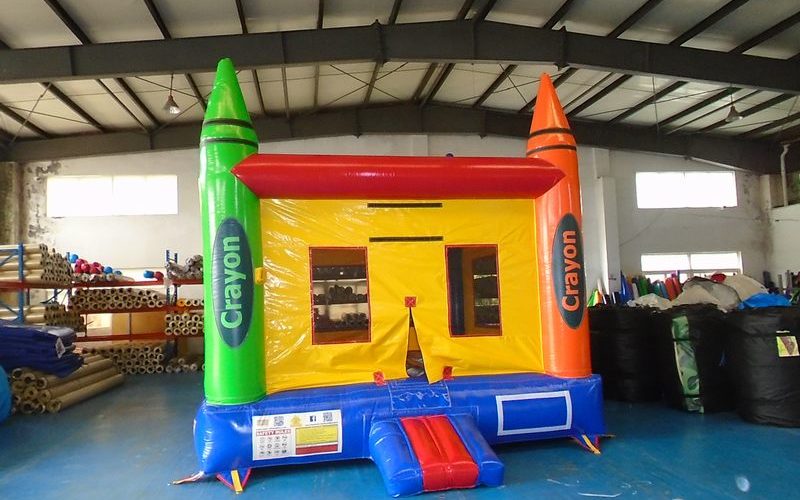
The jumping castle is ready, the children are excited, and everyone wants to get on at once. Before the first session begins, however, someone needs to answer an important question: how many people can the jumping castle safely hold?
There is no universal weight limit for every jumping castle. The correct capacity depends on the model, its intended users and the limits specified by the manufacturer.
In most cases, three separate restrictions must be considered:
- The maximum number of users
- The maximum weight of each user
- The maximum combined weight
Meeting one limit does not automatically mean the others have been met. All restrictions shown on the label or in the operating instructions must be followed at the same time.
Start With the Maximum Number of Users
The user limit controls how many people can enter the jumping castle during one session.
This restriction is not based entirely on weight. It also ensures that users have enough room to bounce without constantly colliding, falling onto one another or being pushed against the inflatable walls.
A castle may remain fully inflated when overcrowded, but that does not mean the number of users is safe. If the label permits a maximum of six users, a seventh person should not enter simply because the inflatable still looks firm.
The permitted number may also change according to the users’ age, height or size. A castle might accommodate more young children than older children, so check whether the instructions provide different limits for different user groups.
Check the Individual Weight Limit
Some jumping castles specify a maximum weight for each person.
This limit is particularly important for models designed for younger children. A person who exceeds the individual restriction should not use the castle, even when nobody else is inside.
Too much weight from one user can place additional force on the jumping surface, seams and internal structure. It may also create stronger movement that affects smaller children nearby.
Never decide whether someone can enter based only on how large or firm the castle appears. A spacious children’s inflatable is not automatically suitable for teenagers or adults.
Do Not Forget the Combined Weight
The combined weight limit is the total permitted weight of everyone inside the jumping castle at the same time.
For example, a group may be below the maximum user number but still exceed the total weight limit if the users are older or larger. In this situation, fewer people should be allowed inside during each session.
The opposite can also happen. A group of young children may remain below the combined weight limit but exceed the maximum number of users. Allowing them all to enter would still create overcrowding.
A safe session must remain within both the occupancy and weight limits.
Group Users by Age and Size
Weight is not the only factor that affects how safely children can play together.
Older or larger children generally create more movement across the bouncing surface. When they use the castle alongside toddlers or much smaller children, the difference in size can increase the likelihood of collisions and falls.
Where practical, divide users into groups of similar age, height or size. Short, organised sessions allow everyone to have a turn without mixing users whose movements may be very different.
Any age or height recommendations shown on the jumping castle should also be followed, even when the group remains within its weight limit.
Can Adults Enter to Help a Child?
Adults should enter a jumping castle only when the model is specifically designed and approved for adult use.
A parent may want to go inside to supervise, retrieve an item or help a nervous child. However, entering a children’s castle can exceed the individual weight limit or place extra force on an area not designed for adult use.
If a child needs assistance, stop the session and ask the other users to exit. Follow the hire company’s or operator’s procedure rather than assuming that an adult can safely enter.
For events where adults will be participating, arrange an inflatable that is specifically rated for adult use.
Does a Larger Blower Increase the Capacity?
No. A larger blower does not increase the number of people or amount of weight a jumping castle can hold.
The blower maintains airflow, while the manufacturer determines the inflatable’s user and weight limits. Changing the blower does not strengthen the jumping surface, seams or internal structure.
Only use the blower specified for the model. An unsuitable blower may produce incorrect air pressure and affect the performance or condition of the inflatable.
If the castle becomes unusually soft or begins to sag during use, ask everyone to exit. Check for power interruption, a blocked air inlet, loose inflation tubes or possible damage before allowing the session to continue.
Where to Find the Correct Capacity
Before using the jumping castle, look for capacity information in the following places:
- The identification label attached to the inflatable
- The operating or safety label near the entrance
- The manufacturer’s instructions
- The product manual
- The hire documentation
Always check information for the exact model. Two jumping castles with similar dimensions may have different capacities because of differences in their design, materials and intended age groups.
If the label is missing or the limits are unclear, contact the hire company, operator or manufacturer before use. Do not copy a weight limit from a similar-looking inflatable.
What Should the Supervisor Monitor?
A responsible adult or trained attendant should control entry and observe the inflatable throughout every session.
The supervisor should:
- Count users as they enter and leave
- Keep the group within all stated limits
- Separate children of significantly different sizes
- Prevent rough play, climbing on walls and deliberate collisions
- Remove shoes, food, drinks and sharp objects
- Stop use if the inflatable loses pressure or becomes unstable
Explain the rules before the first session. Capacity limits are much easier to manage before too many children have entered.
Quick Capacity Check
Before anyone starts bouncing, confirm these seven points:
- What is the maximum number of users?
- Is there an individual weight limit?
- What is the maximum combined weight?
- Are there age or height restrictions?
- Should users be separated by size?
- Is the castle approved for adult use?
- Who will supervise each session?
If any answer is unclear, pause the activity until the correct information has been found.
Frequently Asked Questions
How Many Children Can Use a Jumping Castle at Once?
The permitted number depends on the exact model and the children’s age or size. Check the label or operating instructions rather than estimating capacity from the castle’s dimensions.
Is the Weight Limit Per Person or for the Whole Castle?
It may include both. Some jumping castles specify a maximum individual weight as well as a maximum combined weight. If both are listed, both limits must be followed.
Can Adults Use a Children’s Jumping Castle?
Not unless the manufacturer’s instructions specifically permit adult use. A large children’s castle may still have an individual weight limit that makes it unsuitable for adults.
Does a Bigger Jumping Castle Hold More Weight?
Not necessarily. A larger bouncing area does not automatically mean a higher weight capacity. The materials, structure and intended user group also affect the permitted limits.
What If the Capacity Label Is Missing?
Do not guess. Contact the hire company, operator or manufacturer and request the correct information for that specific model before allowing anyone to use it.
The Final Rule
A jumping castle’s capacity cannot be judged by its appearance alone. The number of users, individual weight, combined weight and recommended age group all need to be considered.
Follow the limits provided for the exact model, separate users by size when necessary and keep the inflatable supervised throughout every session. These simple checks help reduce overcrowding and create a safer bouncing experience.