
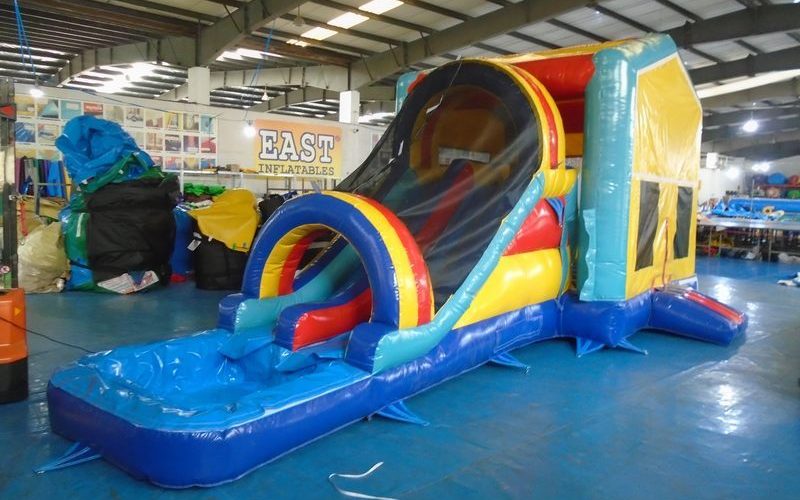
A well-made commercial jumping castle can remain in service for several years when it is used correctly, inspected regularly and stored in suitable conditions. Industry estimates commonly range from approximately three to ten years, but this is not a guaranteed lifespan.
Some units wear out much sooner because of heavy use, poor storage or repeated exposure to unsuitable conditions. Others remain serviceable for longer because they are used less frequently and receive consistent maintenance.
Age alone does not determine whether a jumping castle should remain in use. Its actual condition is more important than the date it was purchased.
Commercial and Residential Castles Are Different
A lightweight residential jumping castle designed for occasional backyard use should not be compared directly with commercial rental equipment.
Commercial units are generally designed for more frequent setup, transport and operation. They may use heavier materials, reinforced stress areas and stronger stitching, but they also experience far more demanding use.
A residential castle might be inflated only a few times each year. A rental unit could be transported, unfolded, operated, cleaned and packed several times in a single week.
The commercial product may be stronger, but the amount of handling and customer use can gradually affect:
- Entrance steps
- Bouncing surfaces
- Slide lanes
- Climbing areas
- Seams and stitching
- Anchor points
- Blower tubes
- Netting and printed panels
For this reason, two jumping castles manufactured at the same time may have very different service lives.
What Shortens a Jumping Castle’s Life?
Several factors have a greater effect on lifespan than age alone.
Frequent commercial use
Every hire adds movement, pressure and contact to the inflatable. High-traffic areas normally show wear before decorative walls or sections that users rarely touch.
A busy rental unit may require repairs or replacement earlier than a similar model used only for private events.
Rough setup surfaces
Dragging a jumping castle across concrete, asphalt or gravel can damage the underside. Even small amounts of repeated abrasion may eventually create thin areas, cuts or punctures.
A suitable groundsheet and careful handling can reduce surface wear.
Sunlight and heat
Outdoor equipment is regularly exposed to sunlight, but extended UV exposure can gradually affect colours and materials. Leaving an inflatable in direct Australian sunlight for longer than necessary may accelerate ageing.
Excessive heat can also affect folded equipment stored in vehicles, shipping containers or poorly ventilated sheds.
Rain and trapped moisture
Occasional rain does not automatically ruin a commercial jumping castle. Problems are more likely when the unit is rolled and stored while damp.
Moisture trapped between layers can contribute to mould, staining and unpleasant odours. Wet equipment should be reopened and dried completely before long-term storage.
Incorrect blower use
The blower should be suitable for the individual inflatable. Insufficient airflow may leave the castle soft, while an unsuitable blower may affect its shape or place unnecessary pressure on the structure.
Do not select a replacement blower simply because its tube fits the inflation sleeve.
Overloading and unsuitable users
Exceeding the permitted number, size or weight of users increases stress on the bouncing surface, seams and internal components.
Adults should not use an inflatable unless it has been specifically designed and approved for them. Children of significantly different sizes may also need separate sessions.
Poor folding and storage
Sharp folds across blower tubes, printed panels, anchor points or decorative features can concentrate pressure in vulnerable areas.
The packaged inflatable should be stored in a dry indoor space, raised off the floor and protected from heat, chemicals, pests and heavy items.
How Maintenance Changes the Lifespan
Maintenance cannot prevent all ageing, but it can identify small problems before they become expensive repairs.
After Every Use
Remove debris and inspect the inflatable while it is open. Check high-contact areas for wear, loose stitching, small cuts and damage to netting or attachments.
Clean visible dirt and make sure the unit is fully dry before packing.
Before Every Event
Inflate the castle in a suitable area and confirm that it reaches its correct shape. Inspect the seams, entrance, anchor points, blower tubes and accessible surfaces.
The blower, leads, mats and anchoring equipment should also be checked.
At Scheduled Intervals
Complete a more detailed inspection based on the unit’s usage and operating instructions. Busy commercial equipment will normally need closer attention than an occasionally used castle.
Keep records of inspections, cleaning, repairs and unusual air loss. A maintenance history can reveal repeated problems that may not be obvious from one inspection.
After Damage or an Unusual Event
Inspect the castle after severe weather exposure, a blower problem, improper use, transport damage or contact with a sharp object.
Do not wait for the next scheduled maintenance date if there is reason to suspect damage.
Repair It or Replace It?
Minor damage does not always mean the jumping castle has reached the end of its life. Small punctures, worn covers and some localised seam problems may be repairable.
The decision should consider:
- The location and extent of the damage
- Whether structural areas are affected
- The number of previous repairs
- The general condition of the material
- The cost and reliability of the repair
- Whether replacement parts remain available
- Whether the unit can still meet its operating requirements
Professional repair may extend the service life of a commercial inflatable, but repeated patching is not always the best solution.
If the surrounding material has become weak, a new repair may fail even when the patch itself is correctly applied.
Signs a Jumping Castle May Need to Be Retired
A jumping castle should not remain in service simply because it can still inflate.
Warning signs may include:
- Large or recurring seam failures
- Widespread thinning or cracking of the material
- Multiple repairs in high-stress areas
- Damaged or weakened anchor points
- Netting that cannot be restored securely
- Persistent air loss despite using the correct blower
- Structural sections that no longer hold their proper shape
- Mould or contamination that cannot be adequately removed
- Repairs that are no longer practical or reliable
Any issue that may affect safe operation should be assessed before the inflatable is used again.
Retiring a castle does not necessarily mean every accessory must be discarded. Compatible blowers, mats and anchoring equipment may still be usable if they remain in suitable condition and are appropriate for another unit.
How to Help a Jumping Castle Last Longer
Extending the life of an inflatable is mainly about consistent handling rather than one major maintenance task.
Use a suitable groundsheet, follow the operating limits and prevent overcrowding. Keep the blower intake clear and protect electrical equipment from unsuitable conditions.
After each event, clean the unit, dry it fully and fold it without forcing the material. Store it in a protected indoor area and inspect it before the next booking.
Repairs should be completed promptly using appropriate materials and methods. Continuing to operate with a small tear or loose seam may allow the damage to spread.
There is no fixed retirement age for a jumping castle. A unit should remain in service only while it passes the required inspections, maintains its intended shape and can be operated according to its instructions.
Regular care may extend its useful life, but safety should never depend on repeated temporary repairs. If damage cannot be repaired reliably or there is uncertainty about the inflatable’s condition, remove it from service and arrange a professional assessment before it is used again.